

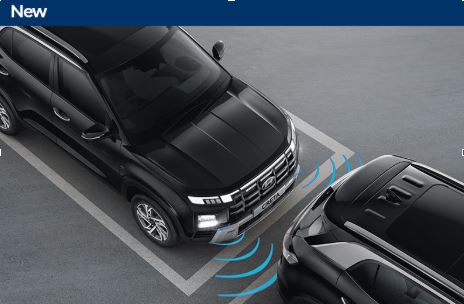
The Hyundai CRETA combines safety systems and connected technologies to support everyday driving on city streets and highways. The Hyundai CRETA safety features focus on protection, awareness, and ease of use to improve control and passenger confidence. From including structural safety elements to advanced assistance technologies and connected features, the CRETA is designed to support diverse driving conditions.
Safety Systems in Hyundai CRETA
The safety foundation of the Hyundai CRETA is built on systems that help maintain stability and control during normal driving. These features support predictable handling and braking as they include:
- A total of 6 airbags provide comprehensive protection for all occupants during a collision.
- The Anti-lock Braking System (ABS) works with Electronic Brakeforce Distribution (EBD) to improve steering control and maintain stability when braking on slippery surfaces.
- Electronic Stability Control (ESC) and Vehicle Stability Management (VSM) detect any loss of traction and automatically apply the brakes to help maintain the intended path.
- Hill-start Assist Control (HAC) automatically holds the brake pressure for a few seconds to prevent the vehicle from rolling back on an incline.
- The Tyre Pressure Monitoring System (TPMS) allows drivers to check the real-time pressure status of each tyre to ensure safety and performance.
Together, these systems form the basis of Hyundai CRETA safety, helping improve braking response, vehicle balance, and overall road stability.
Advanced Driver Assistance Systems
The Hyundai CRETA also includes Hyundai SmartSense-Level 2 ADAS. It includes advanced driver-assistance technologies that support situational awareness and timely responses to changing traffic conditions. These systems monitor surroundings and assist during critical moments by including the following features:
- Forward Collision Warning (FCW) uses sensors to alert the driver when it detects a frontal collision with another vehicle.
- Forward Collision-Avoidance Assist provides active braking support to help avoid accidents involving vehicles, pedestrians, cyclists, and complex junctions.
- Lane Keeping Assist (LKA) and Lane Departure Warning (LDW) provide alerts and steering corrections to ensure the vehicle maintains proper lane discipline.
- Blind-spot Collision Warning (BCW) and Avoidance Assist (BCA) monitor the vehicle’s blind spots to help make lane changes safer.
- The Driver Attention Warning (DAW) system continuously monitors driving patterns to detect and alert to inattentiveness.
- Smart Cruise Control with Stop and Go (SCC with S&G) maintains a safe following distance from the vehicle ahead and can bring the car to a complete stop in heavy traffic.
- Rear Cross-Traffic Collision Warning-Avoidance Assist (RCCA) improves safety when reversing by detecting and applying the brakes to vehicles approaching from the side.
- High Beam Assist (HBA) automatically toggles between high and low beams to improve nighttime visibility without blinding oncoming traffic.
These systems work together to reduce reliance on manual judgement alone, supporting more informed and timely responses.
Passenger Safety and Protection Features
Safety in the Hyundai CRETA extends to all passengers through features that focus on restraint and structural support:
- Interior features such as 3-point seat belts for every seating position ensure the highest standard of safety for all passengers.
- Integrated seat belt reminders monitor every seat in the cabin to ensure all passengers are properly buckled in before the journey starts.
- Seat belt pretensioners for the driver and front passenger automatically tighten the belts during a collision to minimise movement.
- ISOFIX child seat anchors provide a standardised, highly secure mounting system for easy installation of compatible child seats.
- An impact-sensing auto door unlock system is programmed to release the door locks immediately after a collision to enable a quicker exit.
- The speed-sensing auto door lock feature engages the locks automatically when the vehicle is in motion.
- Rear disc brakes are included to provide more consistent and balanced braking performance across various driving conditions.
These features are designed to function during both routine and unexpected situations. They ensure safety is distributed throughout the cabin, supporting both individual and family use.
Connected Technology and Digital Access
In addition to safety, CRETA offers several features focused on functionality and remote access. These systems extend control beyond the vehicle and support real-time interaction through these features:
- Hyundai Bluelink connected car technology offers features for remote vehicle access, climate control, and status monitoring.
- Over-the-air (OTA) updates ensure that infotainment and navigation systems stay up to date with the latest software and maps.
- Advanced voice recognition technology enables the driver to control various vehicle functions hands-free.
- Home-to-car connectivity enables users to send remote commands and check vehicle status via Alexa-enabled devices from the comfort of their homes.
These systems allow users to interact with the vehicle before and during usage, improving convenience and control.
Use of CRETA Features in Daily Driving
The relevance of Hyundai CRETA features becomes evident during everyday use. In city conditions, rear parking sensors and a rear camera with dynamic guidelines assist in driving through tight spaces. Collision warning systems provide timely alerts in dense traffic, supporting better awareness.
On highways, systems such as Smart Cruise Control, Lane Keeping Assist, and Driver Attention Warning help maintain consistency during longer journeys. Connectivity features such as remote engine start and navigation updates allow buyers to prepare in advance. Together, these systems support smoother control, improved awareness, and reduced effort across different driving conditions.
Conclusion
Safety and connectivity continue to shape how vehicles are used in daily life. Hyundai CRETA integrates structural protection, advanced assistance systems, and connected technologies to support both control and convenience. By combining these elements, the vehicle addresses practical driving needs across city and highway environments. Understanding how these systems function helps users evaluate their relevance based on usage, ensuring a more informed and confident driving experience.